Navigating Delaware’s Paid Family and Medical Leave: Key facts for employers

There are more than a dozen existing Paid Family and Medical Leave (PFML) laws, and another four are going live in the next couple of years. These laws are all broadly similar, but each has some variation that distinguishes it from the rest. Delaware Paid Leave (DE PL) seems to take that one step further, adding some interesting nuance employers need to track. In this blog, we will review some core elements of the program along with some unique aspects.

Delaware Legislative Hall in Dover,

As a reminder, DE PL will go live on January 1, 2026, and the latest set of proposed regulations was published in early October.

Covered Employers

Requirements: An employer is required to participate in DE PL based on the number of employees primarily working in Delaware.

  • Employers with fewer than 10 employees are exempt, along with federal government employees and any business that is entirely closed for 30 consecutive days or more per year.
  • Employers with 10 to 24 employees working primarily in Delaware must provide Parental Leave only.
  • Employers with 25 or more employees must provide full coverage, which includes Parental Leave, Medical Leave, Family Caregiver Leave, and Military Qualifying Exigency Leave.

Determining number of employees: To determine the number of employees, employers must count the number of employees who primarily work in Delaware and are expected to meet the “covered individual” definition defined in the Family and Medical Leave Act (FMLA). Certain employees working in Delaware may be able to opt-out if they are not expected to meet the eligibility criteria. They can do this via a defined Waiver process, which requires the signature of both employer and employee if both parties pay contributions.

DE PL Unique Aspect: Employers should also note that employees are counted per company based on each FEIN, not the total number of employees if an employer has multiple separate entities in Delaware. However, the Delaware DOL will utilize the FMLA’s definition of “integrated employer.” This means that multiple, separate FEINs may be treated as a single entity and thus count all employees together based on the following factors:

    • common management
    • interrelation between operations
    • centralized control of labor relations
    • degree of common ownership or financial control

When the number of employees changes: When the number of employees meets a threshold for additional coverage, notice to employees is required. The required leave type must be provided within 30 days and maintained for 12 months. For example, once an employer goes from nine to 10 employees, they must provide parental leave. The employee count must fall below the threshold for 12 consecutive months to eliminate coverage, which requires 30-day advance notice to employees.

When it’s voluntary coverage: Finally, employers should note that they can voluntarily provide coverage for any leave type they are not required to provide based on employee counts.

Eligible Employees

An employee is any individual who primarily reports to work at a worksite in Delaware, defined as working at least 60% of their work hours physically in Delaware each calendar quarter. In addition, an employee must meet the following criteria at the time of the application for leave of absence, similar to the eligibility criteria for FMLA:

  1. the employee must have been employed for at least 12 months by the employer with respect to whom leave is requested
  2. have worked at least 1,250 service hours with the employer during the previous 12-month period.

Contributions

Employers and employees may share the contributions for DE PL, which begin on January 1, 2025, one year ahead of the go-live date for benefits. The contribution rate for 2025 and 2026 will be 0.8% of employee wages, split as follows:

  • Parental Leave: 0.32% of wages
  • Medical Leave: 0.4% of wages
  • Family Caregiving Leave + Military Qualifying Exigency: 0.08% of wages

Employers may utilize payroll deductions from covered employees to share up to 50% of the costs with employees, or an employer can opt to pay a higher percentage of the contributions. These contributions are capped at the Social Security taxable limit, set at $176,100 for 2025, as covered in the October 2024 Statutory Update. Employers are only required to pay their share of contributions for the leave types they are required to provide based on the number of Delaware employees. Employers are prohibited from deducting more than 50% of employees’ wages, equal to 0.4% of the total 0.8% rate.

DE PL Unique Aspect: The 0.8% contribution rate applies only to wages earned while working in Delaware.

If any employer provides more than 50% of contributions or otherwise changes the contribution split in the future, notice of the change must be given by December 1 for an effective date of January 1 of the following year.

Benefit Amount

Benefits are calculated based on the employee’s wages 12 months before the application for leave of absence. Benefits are up to 80% of the employee’s average weekly wages, up to the maximum weekly benefit of $900, which is in effect for 2026 and 2027 and then subject to change annually.

DE PL Unique Aspect: benefit amounts are based on wages earned while working in Delaware.

Leave Entitlement

The maximum leave entitlement provided under DE PL is 12 weeks in a 12-month period, using any of the four leave year methods allowed for FMLA: calendar year, fixed year, forward-looking, or rolling backward.

The amount of leave available for each leave reason varies as follows:

  • Parental Leave: 12 weeks per 12-month period and must be taken within one year of a child’s birth, adoption, or placement.
  • Medical Leave, Family Caregiver Leave, or Military Qualifying Exigency Leave: 6 combined weeks per 24-month period.

Any combination of the above can be used, but an employee may not exceed 12 weeks in a 12-month period. Leave can be taken intermittently, with a minimum of one full workday increment.

couple with newborn Baby on bed.

Coordination of Benefits

Coordination with other programs: DE PL runs concurrently with FMLA and may run concurrently with any employer-provided leave of absence, disability benefit program (e.g., Short-Term Disability), and paid leave program.

Use of PTO: Any employer may require an employee to use up to 75% of their accrued but unused PTO before utilizing DE PL, and that required PTO will be counted toward the length of the DE PL leave. An employer and employee may agree to use PTO during DE PL as a top-up to the DE PL benefits, up to 100% of the employee’s average weekly wage.

DE PL Unique Aspect: an employer must have a written policy that outlines the coordination of DE PL and any employer-provided leave of absence, disability benefit program, and paid leave program. The employer must provide written notice to employees that STD, long-term disability (LTD), or any other paid leave program is secondary to PFML. This means the STD, LTD or paid benefit will be reduced or offset. Otherwise, it will be assumed primary (meaning PFML would be reduced/offset).

State Plan Claims Administration

There is a single option to file a claim for DE PL, the Delaware LaborFirst Portal. When an employee submits a claim via the portal, both the employee and employer will receive an automated notification.

DE PL Unique Aspect: After the required materials have been submitted through the portal, the employer will receive a notice about whether the leave is qualified and substantiated. That same notice will advise whether the claim should be approved, the amount of the weekly benefit, and the length of the leave.

The employer must then determine whether to approve or deny the DE PL request, the amount of compensation the employee will receive, and the approved duration of the DE PL leave. If approved by the employer, benefit payments will come from DE PL within 30 days and every two weeks until the end of the approved leave.

parents taking care of baby and looking at laptop together

Private Plan Options

Like most other PFML programs, employers may opt out of the state plan and comply with the DE PL requirements via a private plan. A private plan can be utilized for all required leave types or separately for one or more required leave types: Parental, Medical, Family Caregiver, and Military Qualifying Exigency. In contrast, any remaining leave types not covered by a private plan would be covered under the state plan.

Self or fully-insured private plans: The employer can self-funded private plans or be insured through an approved carrier. In either case, the cost to employees must not exceed the cost an employee would be charged under the state plan.

DE PL Unique Aspect: If the cost of an insured private plan is less than the state plan, the employee is only responsible for 50% of the lower cost rather than still being responsible for the higher contribution that would be charged under the state plan.

Employers may not deduct the costs of a private plan, either insured or self-funded, until the start date for PFML claims.

For self-funded private plans, an employer must have a minimum of 100 covered individuals unless the employer can demonstrate the administrative capacity to manage a self-funded plan adequately. This type of plan must be accompanied by a surety bond equal to one year of state program contributions.

Private plan deadlines: The window to apply for a private plan when benefits begin on January 1, 2026, ends soon. Applications must be completed on the Delaware LaborFirst Portal by December 1, 2024.

Also note that some employers may have applied for their existing plans to be grandfathered in to comply with requirements, which remains in effect until December 31, 2029. Employers with grandfathered plans for all required types of leave are not required to register or report hours and wages until 2030 but may be required to take action for any required types of leave that are not grandfathered.

Key Dates

December 2, 2024: Employers must notify employees of upcoming payroll contributions.

December 15, 2024: The deadline to apply for a Private Plan when benefits begin is January 1, 2026.

January 1, 2025: DE PL contributions begin.

April 1, 2025: First quarterly reporting and contributions due.

October 1 – December 1, 2025: Annual renewal period to apply for a private plan.

January 1, 2026: DE PL benefits begin.

December 31, 2029: Expiration of grandfathered private plans.

How can Marsh McLennan Agency’s Absence, Disability, & Life Practice help?

Please contact us for additional information on the upcoming paid family and medical leave programs or to learn more about how MMA ADL can help you understand these programs.

Marsh McLennan Agency’s Absence, Disability, & Life Specialty Practice helps clients understand, integrate, measure, and manage leaves of absence, time away from work, disability, and life insurance programs. Specializing in absence for over 20 years allows us to help employers meet employee expectations, reduce compliance risk, and manage costs. We are here to be your trusted partner, allowing you to prioritize what truly matters – your people.

Enhancing support: The changing paradigm of paid sick leave programs

As more cities and states mandate employers to provide accrued paid sick leave to their employees, we are witnessing a trend of expanded benefits from places that already require sick leave. Today, 40+ locations require employers to provide paid sick leave, and many have enacted changes that will be live in early 2025.

These changes could be occurring for various reasons, such as increased awareness about the advantages of paid sick leave, addressing disparities in access, or the influence of the COVID-19 temporary legislation coming to an end. This is a dynamic area that employers need to stay informed about.

This blog post will focus on three existing programs, Connecticut, Michigan, and Washington, and how they are making changes for 2025.

Doctor and woman in a healthcare setting

Connecticut

Connecticut passed paid sick leave legislation in 2011, becoming the first state to require that employees earn paid sick leave from many employers. Earlier this year, Governor Lamont signed legislation expanding the sick leave law to make paid sick leave more accessible.

  1. Expands employers mandated to provide paid sick leave: The number of employers covered under Connecticut’s Paid Sick Leave (PSL) requirements will greatly expand. Currently, only employers with 50 or more employees and operate in specific industries (service workers) are covered. The changes for 2025 eliminate the industry limitations, such that all private-sector employers will be covered. This reduces the employee count to 25, which reduces further to 11 employees in 2026 and one employee in 2027.
  2. Reduces accrual rate: In 2025, employers must also provide sick leave at a faster accrual rate, which will change from one hour of accrued sick leave for every 40 hours worked to a 1:30 ratio.
  3. Expands reasons for leave: Employees will also be able to utilize sick leave for more covered reasons, including mental health of the employee or a covered relation, safe time for a covered relation (expanded from child), or closure of employee’s workplace, a covered relations school, or place of care due to a public emergency. In addition to the existing covered relations for which an employee can take sick leave, the updates will allow usage for the following expanded list of covered relations: adult children, an individual to whom the employee stood in loco parentis, the employee’s grandchild or grandparent, the employee’s sibling, and an individual related to the employee by blood or affinity equivalent to a family relationship.

These changes will be effective on January 1, 2025.

Female child in hospital bed

Michigan

Michigan currently requires employers to provide accrued paid sick leave to employees under the Paid Medical Leave Act (PMLA), but that will change as of February 21, 2025, when the Earned Sick Time Act (ESTA) replaces the PMLA. The ESTA is more employee-friendly, providing eligibility for more employees, a faster accrual rate, and broader covered leave reasons.

ESTA)

PMLA

What is the effective date?

Replaces the existing law and becomes effective February 21, 2025.

Current law, effective through February 20, 2025.

What employers are covered?

All employers who employ one or more employees, excluding the U.S. government.

Employers who employ 50 or more individuals.

What is the accrual rate?

Accrue one hour of sick leave for every 30 hours worked.

Accrue one hour of sick leave for every 35 hours worked.

What is the maximum annual accrual?

72 hours

40 hours

Can sick time be frontloaded rather than accrued?

Yes, employers may frontload 72 hours of sick leave.

Yes, employers may frontload 40 hours of sick leave.

What is the maximum annual usage?

72 hours

40 hours

What leave reasons are covered?

Sick time (employee or covered relation), safe time, and other time, including meetings at the child’s school or daycare, closure of the workplace or child’s school, or the need to quarantine.

Sick time (employee or covered relation), safe time, and other time, including closure of workplace or child’s school or need to quarantine.

Which covered relations may an employee take leave for?

Child, grandparent, grandchild, parent, spouse (defined more broadly), and other individual related by blood or with a relationship equivalent to family.

Child, grandparent, grandchild, parent, spouse.

Washington

Since 2018, employers have been required to provide paid sick leave to their employees under Washington’s Paid Sick Leave (PSL) program. Beginning January 1, 2025, the PSL program will feature a few updated definitions that will broaden its scope and applicability to more employees in more situations.

  1. Expanded covered relationships: Employees will be able to utilize paid sick leave to care for additional covered relations, including the employee’s grandchild or grandparent. The definition of the employee’s child is being expanded to include the child’s spouse, including son-in-law or daughter-in-law. In addition, employees will also be able to take time off to care for an individual who regularly resides in the employee’s home and is cared for by the employee.
  2. Expanded leave reasons: The covered reasons are also being expanded. Currently, sick leave may be used when a child’s school or place of care is closed for health-related reasons, but this will be expanded to include closures due to a declaration of emergency by the local, state, or federal government.


Summary

Employers with Connecticut, Michigan, and Washington employees should review their sick leave policies to ensure alignment with the updated requirements. Employers should also ensure that their systems and processes are aligned with changes to the accrual rates. Finally, HR and managers should be trained to ensure that employee sick leave requests are handled appropriately and in alignment with the updated requirements.

Happy senior man is recovering from the coronavirus is visited by his grandchildren

How can Marsh McLennan Agency’s Absence, Disability, & Life Practice help?

Please contact us for additional information on drafting your paid sick leave policies or to learn more about how MMA ADL can assist in understanding these programs.

Marsh McLennan Agency’s Absence, Disability, & Life Specialty Practice helps clients understand, integrate, measure, and manage leaves of absence, time away from work, disability, and life insurance programs. Specializing in absence for over 20 years allows us to help employers meet employee expectations, reduce compliance risk, and manage costs. We are here to be your trusted partner, allowing you to prioritize what truly matters – your people.

Is your FMLA policy both compliant and functional?

Employers are not explicitly required to have a policy outlining their Family and Medical Leave Act (FMLA) process, but most employers covered under the FMLA choose to have such a policy because it helps:

  • Maintain compliance with applicable laws
  • Clearly define the process to ensure standardization and consistent application
  • Sets expectations for employees so they understand their rights and obligations, which can reduce questions
  • Helps HR and Managers understand the process and direct employees when questions or needs arise
parents with newborn baby,

When drafting your policy, there are two areas to consider: Compliance and Function. Employers should seek to draft a compliant policy containing all the required information. And to be functional, it should be easy to understand and access.

Policy compliance

While no set requirement exists for a written FMLA policy, certain information should always be included.


Start by defining the foundational information:

  • Employee Eligibility: Define which employees can take leave under the FMLA.
  • Qualifying Reasons for Leave: Define the reasons an employee can utilize leave under the FMLA.
  • Covered Relationships: Define the family members of an employee for whom the employee can take FMLA leave, including the employee’s spouse, parent, or child.
  • Leave Entitlement: Define the amount of FMLA leave an employee can utilize in a 12-month period.


Be sure to include responsibilities for employees:

  • Notice: Employees must notify their employer of the need to take leave. The employee must provide sufficient information to the employer that leave is needed but doesn’t necessarily have to mention FMLA. An employer may outline specifics in the FMLA policy, including the type of notice (e.g., written) and the timing of the notice, which may vary depending on whether the need for leave is foreseeable or unforeseeable.
  • Certification: The employer may require the employee to submit a medical certification from a health care provider when the leave is for the employee’s own serious health condition or to care for a family member with a serious health condition. Other types of documentation may be required in some circumstances.
  • Return-To-Work Release: When the leave is for the employee’s own serious health condition, an employer may have a uniformly applied policy or practice that requires all similarly situated employees to obtain and present certification from the employee’s healthcare provider that the employee is able to resume work. Note that an employer who implements this requirement must provide notice to the employee in the designation notice but should also detail the requirements in the FMLA policy.


And don’t forget to define your responsibilities and requirements as an employer providing FMLA leave:

  • Benefit Protection: The FMLA policy should state that if an employee has health insurance through an employer’s group health plan, they can continue their group health insurance coverage during FMLA leave on the same terms as if they had continued to work. Other benefits, such as life insurance, disability insurance, sick leave, vacation, educational benefits, pensions, and retirement/401(k), must be available when the employee returns from leave.
  • Job Restoration: The policy should include language that confirms an employee is entitled to return to their same job or to an equivalent job (i.e., a job that is virtually identical to the employee’s original job in terms of pay, benefits, and other employment terms and conditions).
  • Employee Protections: The regulations prohibit the employer from various actions, which should be spelled out in the employer’s FMLA policy. For example, an employer may not interfere with, restrain, or deny any FMLA right and may not discriminate or retaliate against an employee utilizing FMLA. There are many other rights and protections for an employee taking (or attempting to take) FMLA.


Other areas will be good to clarify and define:

  • Calendar Method: The FMLA regulations allow an employer to choose one of four options for calculating the 12-month period (leave year) in which the 12 weeks of FMLA can be used. The policy should include the option your organization chooses.
  • Use of Paid Leave: FMLA is unpaid but can be supplemented. The FMLA policy should state the circumstances under which an employee may use paid leave during FMLA and/or when an employee is required to utilize any available paid leave.
  • Intermittent Leave for Bonding: Intermittent or reduced-scheduled leave for bonding may only be taken with employer approval, so an employer should indicate whether intermittent (or reduced-scheduled) bonding leave is allowed in the policy.
  • Shared FMLA for Spouses: An employer’s FMLA policy should include whether spouses (who are both employed by the employer) are required to share a combined total of 12 weeks of FMLA during any 12-month period when leave is for bonding (birth, adoption, or foster care of a child), or to care for the employee’s parent with a serious health condition.
  • Key Employee: If an employer chooses to deny job restoration to key employees (salaried, FMLA-eligible employees who are among the highest-paid 10% of all the employees employed by the employer within 75 miles of the employee’s worksite), that language must be included in the FMLA policy.
  • Other Leaves and Benefits: The FMLA policy should include language establishing how an employee’s FMLA rights will interact with and be impacted by other leaves and pay benefits, including when and how FMLA will run concurrently with company-provided leaves, state/local leaves, short-term disability, PTO or sick leave, and any statutory paid benefits. Employers should include a statement that the FMLA policy will be administered in compliance with all FMLA requirements and other applicable laws (e.g., ADA, PWFA ).
Pregnant woman with ultrasound scan picture

Policy functionality

Employers have flexibility in how they incorporate all this information into their FMLA policy, but they must ensure that the information aligns with their unique leave of absence process.

Employers often draft the policy in the same sequence as an employee would experience during the typical leave of absence process. All of the key information above can be fit into the applicable section of the policy so that it flows smoothly and provides an employee with an overall understanding of the broader leave of absence process.

Employers may also want to include a section of definitions that offers detailed information about various terms used in the policy, such as serious health conditions, covered relationships (i.e., spouse, parent, child), and any other terms that may confuse employees.

Lastly, employers should ensure that all employees have access to the FMLA policy and know where to find it – either in a handbook or on the company intranet.

Young woman working with a laptop.

On-going reviews

Once your employee-facing FMLA is drafted and published, schedule periodic reviews and updates to ensure it remains compliant and aligns with the employer’s FMLA process.


How can Marsh McLennan Agency’s Absence, Disability, & Life Practice help?

Please contact us for additional information on drafting your FMLA policies or to better understand how MMA ADL can assist with drafting or reviewing your FMLA and/or other LOA policies.

Marsh McLennan Agency’s Absence, Disability, and Life Specialty Practice helps clients understand, integrate, measure, and manage leaves of absence, time away from work, disability, and life insurance programs. Specializing in absence for over 20 years allows us to help employers meet employee expectations, reduce compliance risk, and manage costs. We are here to be your trusted partner, allowing you to prioritize what truly matters – your people.

Across the Map of Paid Sick Leave

Marsh Mclennan Agency’s most recent statutory update covered a broad spectrum of topics, including PWFA and paid statutory leaves across the map. It also provided overviews of various paid sick leave regulations and updates in Washington, Illinois, and New York. For this blog post, we discuss what changed and some resources you may find helpful.

USA Map with pins

Washington

Let’s start out west, where Washington’s paid sick leave will be expanding, becoming effective January 1, 2025. Reasons for leave will include the closure of an employee’s child’s school or daycare due to an emergency declared by the state or local government. It will also expand the definition of covered relationships, which now includes absences for a child’s spouse and a non-family member who lives with and depends on the employee.

Whenever there are clarifications or updates such as these it is a good time to make sure your paid sick leave policy, notices, and various education materials are up to date. Washington State Department provides some great reference resources on their website to help guide you as well.


Thermometer, father and sick child in bed to sleep with a fever with paternity leave to check temperature. Black girl kid and a man together in bedroom for medical risk, health test and virus problem

Illinois

Next stop, Illinois, where we saw some clarifications of the Illinois Paid Leave for All Workers Act (PLAWA) when the final became effective April 30, 2024. This Illinois law is similar to accrued paid sick leave requirements that we see in many other states, but covers absences for any reason (not limited to employee’s own sickness or caring for a family member, etc.) and carves out employers that are covered by existing city/county ordinances. Like Washington, the Illinois Department of Labor website has some great resources, including employee notices that can be leveraged.

Which leads us to Cook County, which has no major updates or changes, and Chicago. Chicago’s “new” Paid Leave and Paid Sick and Safe Leave ordinance became effective July 1, 2024. It goes beyond many other state/local sick leave regulations by providing a total of 80 hours of paid leave, 40 hours of more traditional sick leave, and 40 hours that can be used for any reason. A few things to keep in mind:

  • Ensure your policies adhere to the standard put in place
  • Employers should be aware that they must provide notice to all covered employees with their first paychecks and information available in common areas of the workplace.

The Department of Business Affairs and Consumer Protections has a great FAQ available that provides many answers you may be looking for.


New York

Next, we head further east to New York, where the state enacted a first-of-its-kind legislation expanding paid sick leave to provide an additional 20 hours of paid prenatal leave. This paid time off is an amendment to the existing paid sick leave law, but employers must provide pregnant employees with separate and additional 20 hours beginning January 1, 2025.

We will have more information as we hear updated details and guidance from the state, and we will start to watch for other locations that might copy New York’s approach.

Close up of cute pregnant belly and x ray ultrasound scan of baby, x-ray pregnant.

Connecticut

Finally, significant changes are coming to Connecticut’s accrued paid sick leave law. Connecticut’s existing law requires only those employers with “service workers” to provide accrued paid sick leave, but recent changes will expand that requirement to nearly every employer in Connecticut by 2027 and will impact any employer with 25 or more employees as soon as January 1, 2025. There are also changes to the accrual rate, which is increasing from one hour accrued per 40 hours worked to one hour accrued per 30, expanded covered uses, record retention, and many other changes.

All employers in Connecticut should take a few steps in advance of these changes:

  • Review any existing sick leave policies
  • Check HRIS or payroll systems to ensure that accruals are set up for Connecticut employees
  • Train managers and human resource teams in Connecticut to recognize the types of requests that would be covered under sick leave

Be sure to check out the statutory update for the full list of updates to accrued paid sick leave from coat-to-coast and everywhere in between, along with federal updates, and state FMLA laws!

How can MMA ADL help?

Marsh McLennan Agency’s Absence, Disability, and Life Specialty Practice helps clients understand, integrate, measure, and manage leaves of absence, time away from work, disability, and life insurance programs. Specializing in absence for over 20 years allows us to help employers meet employee expectations, reduce compliance risk, and manage costs. We are here to be your trusted partner, allowing you to prioritize what truly matters – your people.

Comparing Accommodation Rights: PWFA and ADA

Let’s start by defining each:

PWFA: Requires covered employers to provide reasonable accommodations for an applicant’s or employee’s known limitations related to pregnancy, childbirth, or related medical conditions unless the accommodation will cause the employer an undue hardship.

ADA: Prohibits discrimination against individuals with disabilities in various areas of life. Beyond that, Title I of the ADA requires an employer to provide reasonable accommodation to qualified individuals with disabilities, except when such accommodation would cause an undue hardship.

There are a few similarities between the two laws:

    • both programs require employers with 15 or more employees to adhere to these programs
    • both require employers to provide reasonable accommodations in certain situations
    • both advise that each situation be looked at on a case-by-case basis. The employer needs to analyze the individual circumstances of the request to determine whether and how to provide accommodation(s).
    • both, and specifically under the PWFA, state the employer should consider other reasonable accommodation options before exploring leave of absence as an accommodation
    • both state that leave of absence may be a reasonable accommodation, including reduced schedule or intermittent leave.
    • both define “undue hardship” relatively the same

In many cases, a pregnant applicant or employee can be covered by the ADA and PWFA, but that is not always the case. Which brings us to …


Key differences between the PWFA and ADA:

  1. Who is eligible?

PWFA: The PWFA protects all employees (or applicants) who work for a covered employer and have known limitations related to pregnancy, childbirth, or related medical conditions.

ADA: The ADA protects qualified individuals with disabilities, which is any person who has a physical or mental impairment that substantially limits major life activities, has a record of such an impairment, or is regarded as having such an impairment.


  1. Should the eligible employee be able to handle their essential job function for an accommodation to be instituted?

PWFA: Not necessarily. In limited situations under the PWFA, an employee may be eligible for accommodation even when they are unable to perform the essential functions. There are three requirements in this situation:

a. inability to perform the essential functions must be temporary

b. essential functions can be performed in the near future

c. the inability to perform the essential functions can be reasonably accommodated

The PWFA provides additional information and definitions regarding those terms. For example, temporary is defined as “lasting for a limited time, not permanent,” and the near future refers to a time period within 40 weeks, the typical duration of a pregnancy.

ADA: Yes. Under the ADA, the employee must be able to perform the essential functions of the position. An employer is not required to eliminate or remove essential functions as part of the accommodation.


  1. What types of medical conditions or disabilities must be accommodated?

PWFA: The PWFA protects those with known limitations related to pregnancy, childbirth, or related medical conditions. The condition does not need to rise to the level of disability. Instead, pregnancy itself is covered. These terms are broadly defined in the PWFA and may include infertility and fertility treatment, use of contraception, termination of pregnancy, and many other pregnancy-related issues. PWFA also covers several conditions that are not unique to pregnancy or childbirth, such as migraine headaches, nausea or vomiting, and others.

ADA: The ADA covers individuals with disabilities – a significantly broader category than PWFA but more limited in scope when it comes to pregnancy and pregnancy-related conditions. Under the ADA, pregnancy itself is not considered a disability and is not covered unless there are additional related conditions that rise to the level of a disability.


  1. Can an employer require medical documentation before providing an accommodation?

PWFA: The PWFA proposes that there are many situations in which an employer should review and provide an accommodation without requiring medical documentation. Thus, an employer may only require certification if it is reasonable for the employer to determine whether to grant the accommodation. The PWFA also introduces the concept of the employee’s self-confirmation. This means the employee’s statement about limitations and accommodations is all that is required in some cases, and requesting documentation is not reasonable. It would also not be reasonable if the limitation and need for accommodation is obvious, which could be:

      • when the employee has provided sufficient information,
      • when the employee is pregnant and requests any of the four common types (see below),
      • or when the limitation is lactation or pumping.

ADA: Under the ADA, employers may only ask for medical certification when the disability and/or need for accommodation is not known or obvious. If the disability and need for accommodation are obvious, such that the employer knows of the disability without the employee mentioning it or asking for an accommodation, an employer should move to the next step of identifying potential accommodation(s).


  1. What types of accommodations must be provided?

PWFA: Each situation must be reviewed on a case-by-case basis, similar to the ADA, but four requests should be processed quickly without medical documentation and with a limited interactive process:

      • carrying and drinking water
      • additional restroom breaks
      • sitting or standing changes
      • breaks to eat or drink, as needed

In addition, the PWFA provides a non-exhaustive list of potential accommodations, including job restructuring, modified schedules, more frequent breaks, permitting the use of paid leave or providing unpaid leave, light duty, telework, and more.

It is also important to note that the PWFA will generally cover requests related to lactation and pumping, which are not typically covered under the ADA.

ADA: The EEOC has provided a similar list under the ADA.


  1. Can the employer provide alternative options for the accommodation without the employee’s consent?

PWFA: No. The PWFA does not allow an employer to choose an accommodation but requires collaboration through an interactive process.
ADA: Yes. The ADA also typically uses the interactive process but allows the employer to choose to provide an alternative accommodation rather than the employee’s requested accommodation as long as it is effective.


  1. Can the employer require leave as an accommodation?

PWFA: The PWFA prohibits an employer from requiring an employee to take a leave of absence as an accommodation if the employee is seeking an at-work accommodation (and such accommodation is reasonable and available).
ADA: This is a best practice under ADA but not a requirement.

As employers continue to adjust processes to align with PWFA requirements, a couple of things that will help get you started on being compliant prior to the effective date of the final regulation, June 18, 2024:

    • Review your existing accommodations policy (and related process control documents) to ensure compliance with PWFA, or consider drafting a separate PWFA policy.
    • Train your people managers and HR to ensure they are aware of the broadened requirements under PWFA so that they understand how to recognize a request for accommodation under the PWFA.

For additional information, check out the EEOC’s summary of PWFA. The EEOC previously released the proposed PWFA regulations and published the final regulations on April 19. They will go into effect 60 days later, on June 18, 2024.

Employers should also be aware of many existing laws that protect pregnant employees, including the ADA, The Providing Urgent Maternal Protections for Nursing Mothers Act (the PUMP Act), and various state/local laws that require accommodation or required an employer to provide other protections and benefits.


This information is provided for informational purposes and should not be considered legal advice.

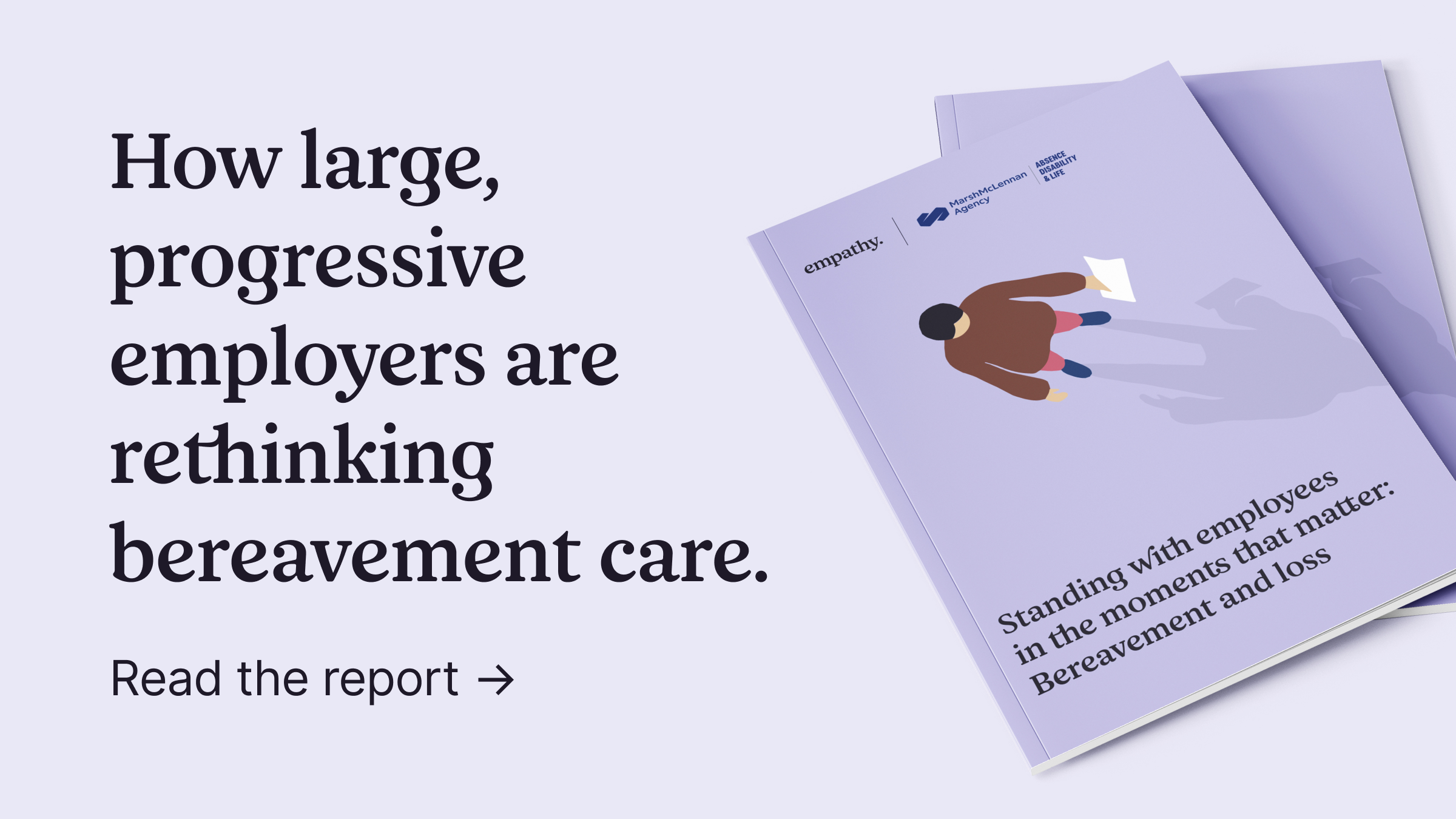
How Top Employers are Approaching Bereavement Care: A Report

August 8, 2023

MMA’s Absence, Disability, and Life Practice and Empathy, a platform for helping families navigate the emotional and logistical challenges of loss, recently partnered to better understand how top employers are supporting their employees in some of life’s most difficult moments – through bereavement and loss.

The research conducted sheds light onto the key bereavement care initiatives and comprehensive benefits being offered at today’s top companies.  The findings show the compassion industry-leading companies are showing their workforce, bringing in a new era of bereavement support.

This is the first installment of a broader series. The “Moments that Matter” series sets out to recognize compassionate, industry-leading large employers who are committed to supporting their employees during life’s most challenging times.  The series builds off the release of MMA ADL’s 2023 Leaves of Absence and Time Away from Work Survey, which revealed a significant focus on and expansion of company-paid policies among employers.

Name(Required)

Coronavirus (COVID-19) Leave of Absence Considerations

March 6, 2020
Introduction

The emergence and spread of the coronavirus disease (COVID-19) has elicited myriad reactions on all fronts. While companies are struggling to forecast the economic impact, they must also manage immediate business needs and at the same time demonstrate care for the well-being of their employees. We have all seen the first-level precautionary advice on reducing the spread of the virus such as amplified hygiene and cleaning practices, limited contact with large groups of people, and travel restrictions, but employers must also prepare for employee absences that may be a necessary component of any business continuity plan.

Developing a “Coronavirus Leave” Policy

MMA ADL’s Absence, Disability and Life (ADL) practice has been in close contact with our customers to see how they are responding to this issue and provide assistance where possible. This collaboration, in conjunction with advice from legal counsel, has resulted in the following points to consider in developing a “quarantine” policy focused on coronavirus or other infectious disease.

Policy Design

Keeping in mind that a company’s industry or business needs may warrant adjustments in approach, the basic outline of a quarantine policy may be as follows:

    1. Employees should be informed around when and how to notify management of potential or confirmed exposure. Managers should be provided with guidance on next steps in either scenario.
    2. If an employee has been exposed, or fears they may have been exposed, to someone with coronavirus, the employee will be required to work from home for a 14-day period to monitor whether symptoms develop.
        • This could be extended to include employees returning from international travel.
        • Special consideration may need to be given for essential personnel who cannot work from home, such as an alternative work location.
        • Additional considerations should be made for non-essential employees that do not have the option to work from home.
    1. If no symptoms develop the employee should follow the employer’s normal return to work process.
    2. If symptoms develop the employee should follow the employer’s process to apply for Short Term Disability (STD), FMLA and/or any applicable company leave.
        • Note that the diagnosis may or may not qualify under STD; normal plan rules and requirements would apply.
        • If the virus was communicated in the course of the employee’s regular job, the absence could fall under Workers’ Compensation. If the employee contracted the virus at work, but incidentally, Workers’ Compensation likely would not apply.
        • The U.S. Equal Employment Opportunity Commission (EEOC) has stated in recent guidance (see below under ADA/ADAAA) that employers are justified in requesting return to work certification from a doctor before permitting employees to return to the workplace. In addition, due to demand that may result from an increased need for health care providers it is suggested that employers may attempt a “new approach” for this certification. Employers will want to engage their disability insurers and leave administrators in determining what will satisfy the requirement (e.g., certification from a telemedicine provider, etc.).
Quarantine – to Pay or Not to Pay?

If an employer’s existing leave policies do not provide for paid leave under these circumstances, the employer can require employees to use accrued sick time, vacation or PTO for the days they must stay home, and may require exempt employees to make up lost work time. Employers may want to consider adjusting existing time off or leave programs, or creating a separate paid policy, to support employees who must stay at home.

Be Conscious of Compliance

Employers should take care that any policy developed complies with the requirements of various employment laws:

Family and Medical Leave Act of 1993 (FMLA): Coronavirus would qualify as a “serious health condition” under FMLA, so FMLA procedures should be followed for eligible employees who have been diagnosed. Leave for an employee without an actual coronavirus or severe flu diagnosis should not be designated FMLA. Comparable state laws may provide additional leave benefits.

Americans with Disabilities Act (ADA/ADAAA): Leave or work schedule changes could be considered reasonable accommodations to alleviate physical or mental health impacts of the coronavirus threat. The U.S. Equal Employment Opportunity Commission (EEOC) has released a “preparedness” document to assist employers in identifying how and when the ADA might apply under pandemic circumstances; the document addresses:

    • Medical inquiries and requiring medical examination
    • The definition of “direct threat”
    • Requiring symptomatic employees to stay home
    • ADA-compliant practices prior to and in the event of pandemic:

   What is ok and not ok to ask and require of employees

   Requiring symptomatic employees to stay home

   Providing new and maintaining existing accommodations

   Requiring a doctor’s note to return to work

Fair Labor Standards Act (FLSA): Generally speaking, the FLSA does not require employers who are unable to provide work to non-exempt employees to pay them for hours they otherwise would have worked (note that a CBA or other contract may alter this). Salaried exempt employees must receive their full salary in any week in which they perform any work, with limited exceptions.

The Department of Labor’s webpage dedicated to Pandemic Flu and the Fair Labor Standards Act further clarifies that the FLSA and its implementing regulations do not prevent employers from implementing telework or other flexible work arrangements. If these arrangements are allowed, employers must pay non-exempt employees no less than the minimum wage for all hours worked and to pay at least one and one-half times the employee’s regular rate of pay for all hours worked over 40 in a workweek.

HIPAA: Circumstances surrounding a pandemic do not excuse employers from their responsibility to protect their employees’ privacy under HIPAA. However, a recent bulletin released by the Department of Health and Human Services (HHS) states that “appropriate uses and disclosures of the information still may be made when necessary to treat a patient, to protect the nation’s public health, and for other critical purposes”. The full guidance, which features additional resources for information, can be found on the HHS’ Emergency Situations webpage.

Inform Your Workforce

Employers are required under the Occupational Safety and Health Act’s (OSHA) general duty clause to provide their employees a place of employment “free from recognized hazards that are causing or are likely to cause death or serious physical harm”.  It is imperative that employers develop a solid action plan to protect their employees from the spread of infectious disease. Available resources and benefits, plus what is expected of employees themselves, must be clearly communicated.  It is recommended that established policies be posted in accessible areas and distributed to each employee as possible.

Additional Considerations

Employers are also advised to:

    • Work with all benefit plan carriers and vendors to ensure that any “actively at work” requirement included in a contract or agreement features an exception for employees on quarantine leave, thereby maintaining employees’ active status and benefits eligibility during this period.
    • Contact vendors who manage Business Travel Accident and travel assistance programs to see what may be available to employees who are away from home including evacuation support and get clarification/confirmation on what exclusions may exist so you can plan accordingly.
    • Remind employees of and encourage them to utilize existing resources to help them navigate a situation that is (or may become) challenging, such as Employee Assistance Programs (EAP), programs available through their medical carrier and even how to leverage telemedicine.
    • Consult the following resources for additional information and developments:
Conclusion

As the full impact of this current threat is yet unknown, employers are strongly advised not to take a “wait and see”’ approach, but to put policies and processes in place to help their organizations weather this, and potentially any future, storm. These decisions should include multiple disciplines within your organization as it relates to broader risk and talent management strategies.

For additional information, please visit MarshMMA.com Coronavirus Outbreak Information

We’re here to help. MMA ADL’s absence, disability and life experts are constantly developing innovative employee-benefit solutions to maximize workforce productivity, ensure compliance and enhance the employee experience.

To learn more:

Email: [email protected] or visit www.trionadl.com

No part of this document may be reproduced, quoted, or transmitted in any form or by any means (electronic, mechanical, photocopying, recording or by any information storage and retrieval system), without express, prior permission, in writing from Marsh & McLennan Agency, LLC.

This document is not intended to be taken as advice regarding any individual situation and should not be relied upon as such. MMA ADL Group, a Marsh & McLennan Agency, LLC Company shall have no obligation to update this publication and shall have no liability to you or any other party arising out of this publication or any matter contained herein. Any statements concerning actuarial, tax, accounting or legal matters are based solely on our experience as consultants and are not to be relied upon as actuarial, accounting, tax or legal advice, for which you should consult your own professional advisors. Any modeling analytics or projections are subject to inherent uncertainty and the analysis could be materially affective if any underlying assumptions, conditions, information or factors are inaccurate or incomplete or should change. Copyright © 2020 MMA ADL Group, a Marsh & McLennan Agency, LLC Company. All rights reserved.

MMA ADL Announces Release of 2019 Leaves of Absence Survey Results

MMA ADL, a leading advisor in the employee benefits marketplace for over 20 years, announces the release of results from the 2019 Leaves of Absence Survey. The survey is a comprehensive study of large employer leaves of absence strategies, providing employers with information and analysis about common absence policy design and administrative practices. With paid time off programs comprising upwards of 20% of average payrolls and an estimated 6% of productivity loss, understanding leaves of absence has never been more important. The survey has received widespread participation, including:

  • Approximately 200 employers with an average size of 32,000 employees
  • 22 of the Fortune 100 companies
  • Representation of 14 industries including healthcare, manufacturing, tech, and finance
  • Current employer leave practices for more than 6 million employees from all 50 states

Comparing 2019 survey data against 2017 survey results suggests that leaves of absence in the workplace continue to present significant challenges for employers. The war for talent, a byproduct of the highly competitive job market, has more employers adopting leave policies focused on family and lifestyle needs to help attract top talent.

Organizations struggling to design leave policies that balance legislative compliance, employee support, and cost-effectiveness can benefit greatly from the data derived through the Leaves of Absence Survey. The survey results offer insight into:

  • The dynamic and complex statutory landscape
  • Parental leaves and caregiver policies
  • Training and communication strategies
  • Industry standards for maternity leave and PTO
  • Degree of compensation during various leaves of absence
  • And more…

Get The Executive Summary Today!
blue arrow

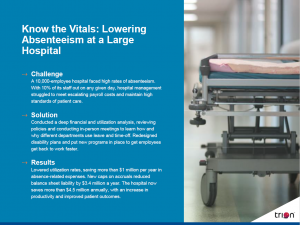
Lowering Absenteeism at a Large Hospital

Absenteeism is a growing issue. Whether planned or unplanned, employee absences are costly and a major disruptor of business. On average, paid time-off comprises upwards of 20% of payroll and may account for 6.2% productivity loss. Also, multistate companies must ensure they are compliant and competitive in all of the regions and industries where they operate.

To Learn how MMA ADL’s Absence, Disability, and Life team helps clients maintain costs and drive productivity while staying compliant, contact us for more information.